Personal project · Web Design · Hospitality · Real Estate
Picar Studio
Picar Studio is a personal project where I explore how digital experiences shape the way places are perceived. This case study brings together two of its sites: VAGA, a guesthouse on the Portuguese coast, and AUREL, a residential building in Barcelona.
Overview
Picar Studio started as a personal project, a space to explore design outside of product interfaces. It focuses on hospitality and real estate, where a website is often the first contact with a place and has to build trust before anyone visits. I worked on every part of it: positioning, content structure, visual direction, prototyping and the final build, using AI-native tools along the way.
Approach
Both projects followed the same three steps. The goal was never a website on its own, but an experience that leads a visitor towards a decision.
Read
Understand the place, the sector and the decision the visitor is being asked to make.
Structure
Define the hierarchy, the sequence of content and the modules that carry it across every screen.
Build
Bring it to life as a working site, consistent in every detail and ready to perform.
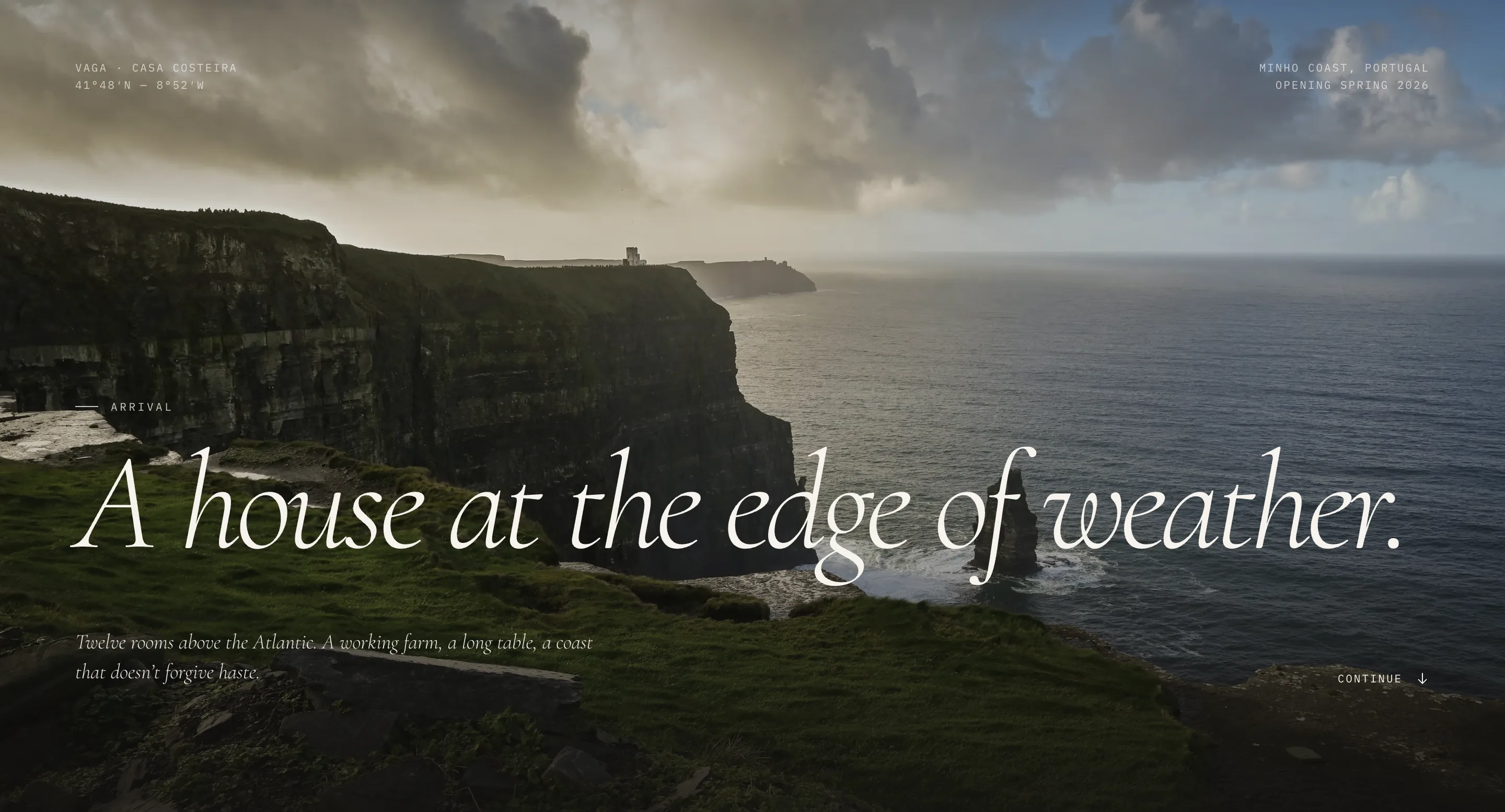
01 · VAGA, Casa Costeira
Twelve rooms above the sea on the Atlantic cliffs of northern Portugal: a working farm, a long table, a coast that doesn't forgive haste. VAGA opens without any recognition, in a market that rewards what is easy to read over what has depth. Most hospitality sites communicate what a property offers. VAGA needed to communicate what it is, before prices, before availability, before the idea of writing to the house even forms. The question was how a guest moves from first encounter to conviction without ever feeling pushed towards a transaction.
VAGA · Key design decisions
An eight part scrolling experience
Arrival, philosophy, architecture, rooms, rituals, booking, launch and reflection. Each part has its own atmosphere and every transition is deliberate.
A room for each weather
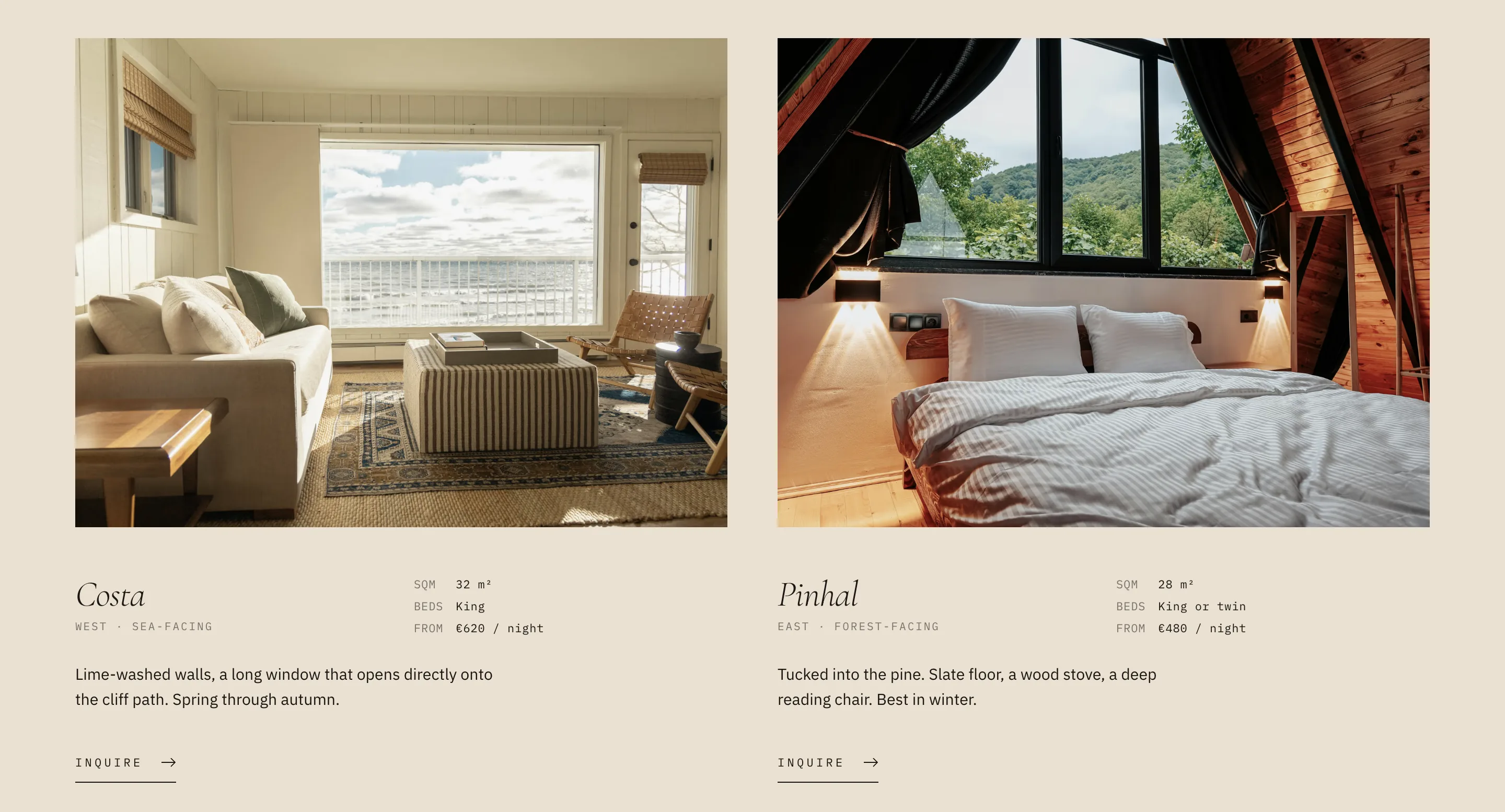
Rooms are presented by the weather they belong to, Costa facing the sea and Pinhal facing the forest, instead of by amenities and price.
A letter, not a booking form
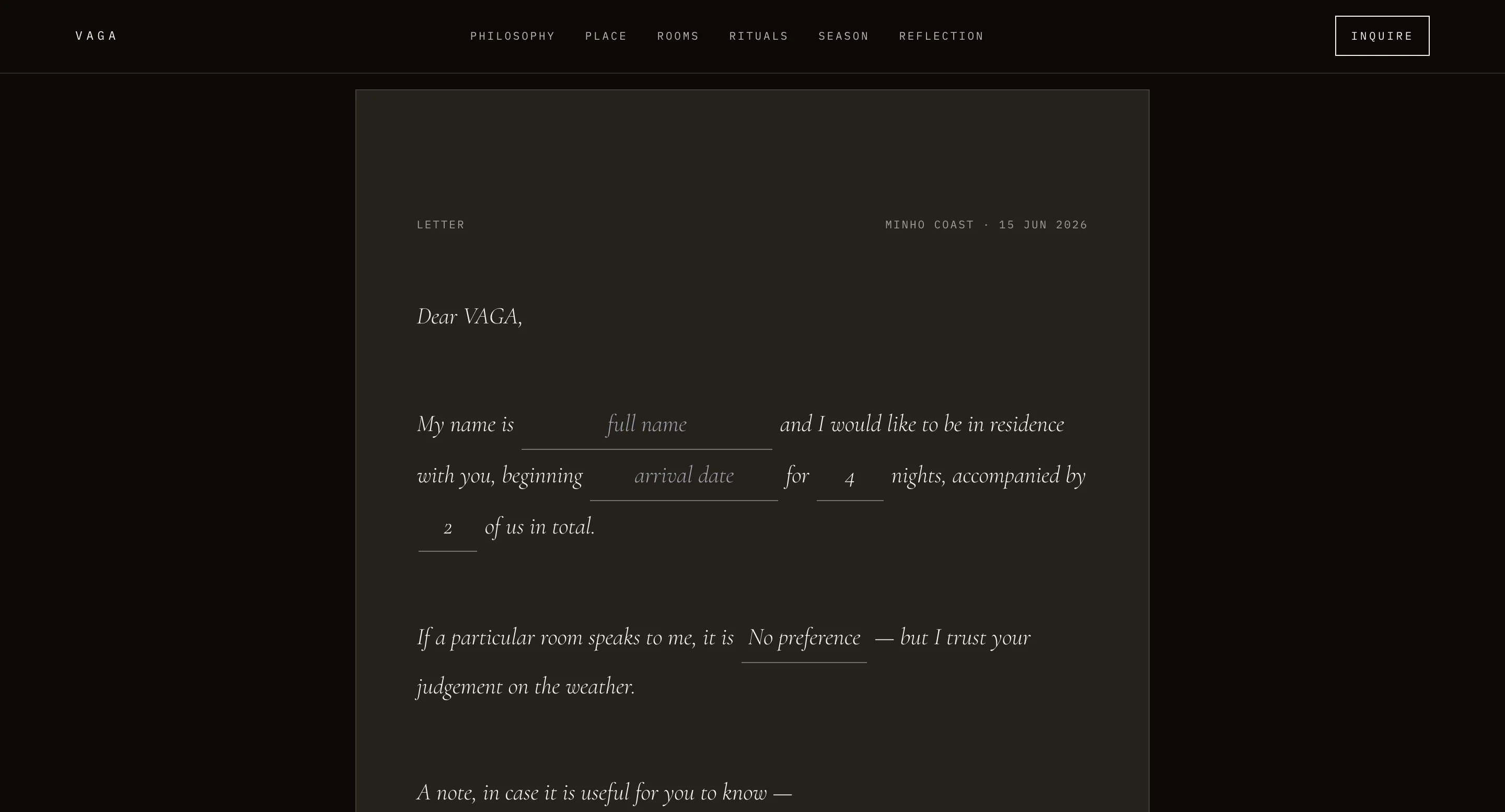
The inquiry opens with “Dear VAGA,” and asks for name, arrival date and nights inside the sentence, so the first contact reads like correspondence rather than a reservation.
Restraint as a principle
Nothing is decorative. Every element earns its place through what it does, not through effect.
02 · AUREL
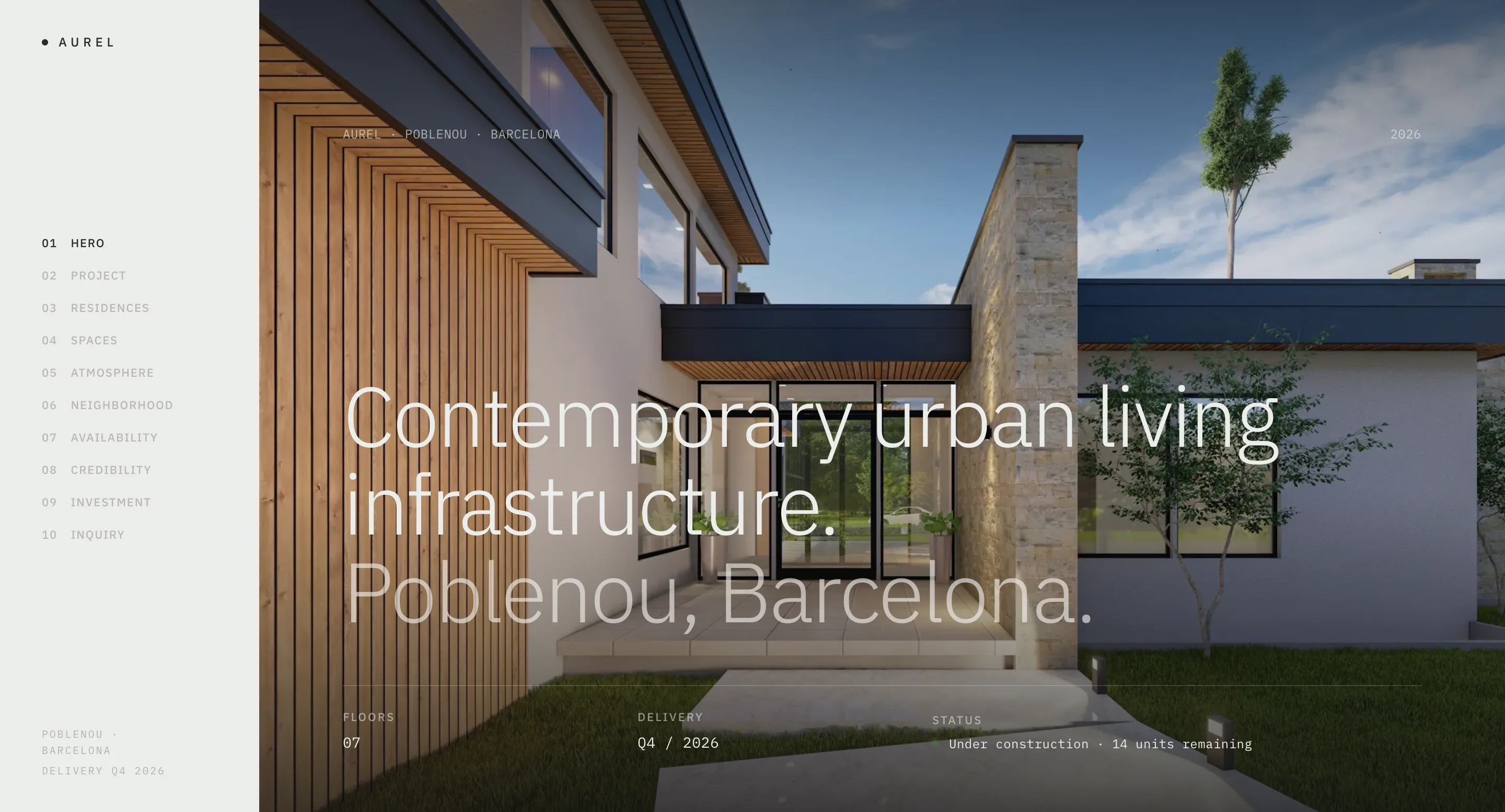
A contemporary mixed use building in Poblenou: 48 residences over 7 floors on Carrer de Pere IV, in Barcelona's 22@ district. It is a pre construction project in a competitive market, where credibility comes before emotion. Buyers and investors need to trust the building before they are invited to imagine living in it, so the site had to explain what the building is, its logic, its materials and its spaces, before talking about price.
AUREL · Key design decisions
Ten sections, ten buyer questions
The structure follows the questions a qualified buyer or investor would ask, in the order they would ask them.
Credibility first, atmosphere second
Materials, plans and spatial logic come before lifestyle imagery.
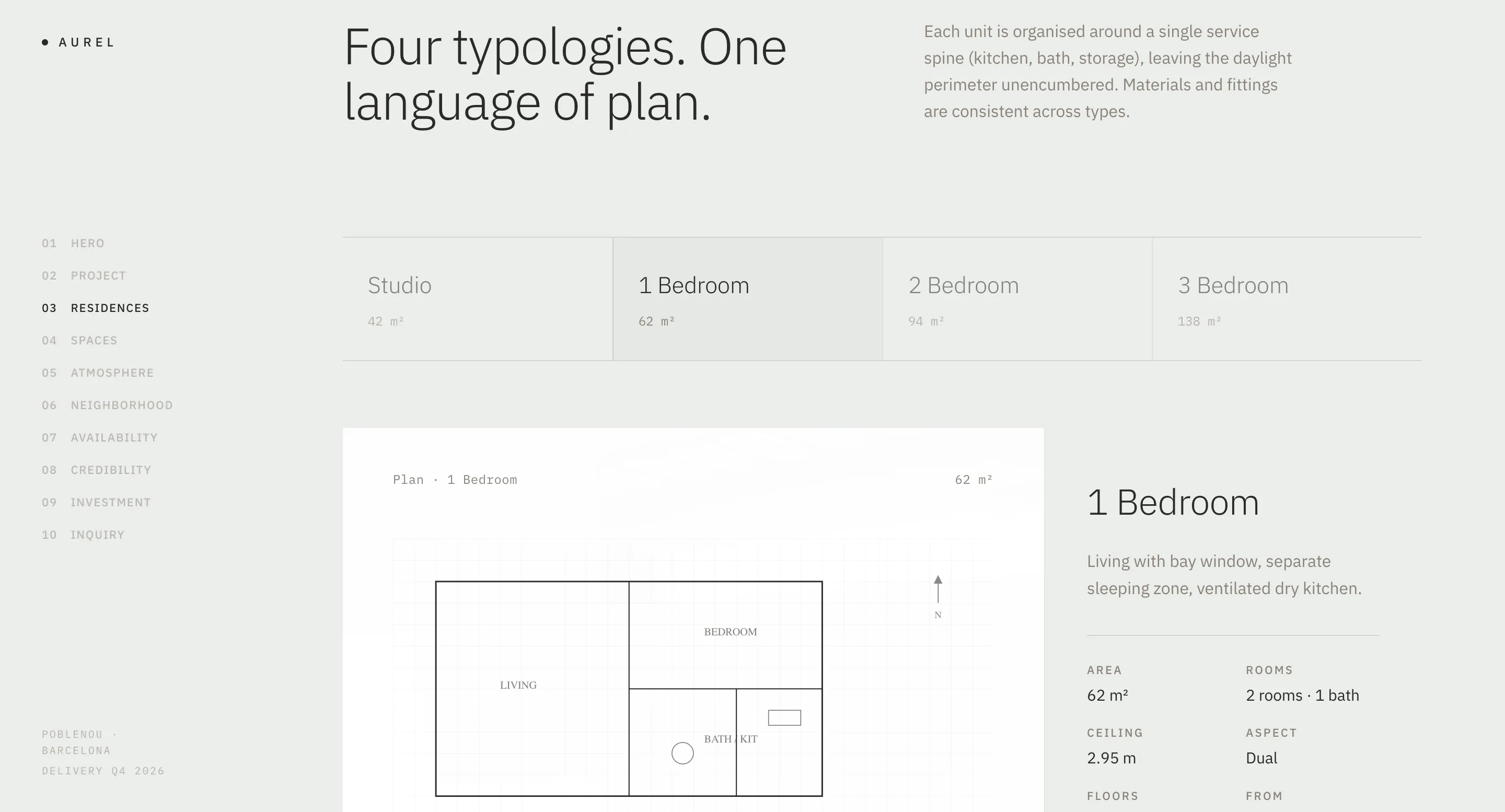
Four typologies, one plan language
All residences use the same way of reading floor plans, so comparing them takes no extra effort.
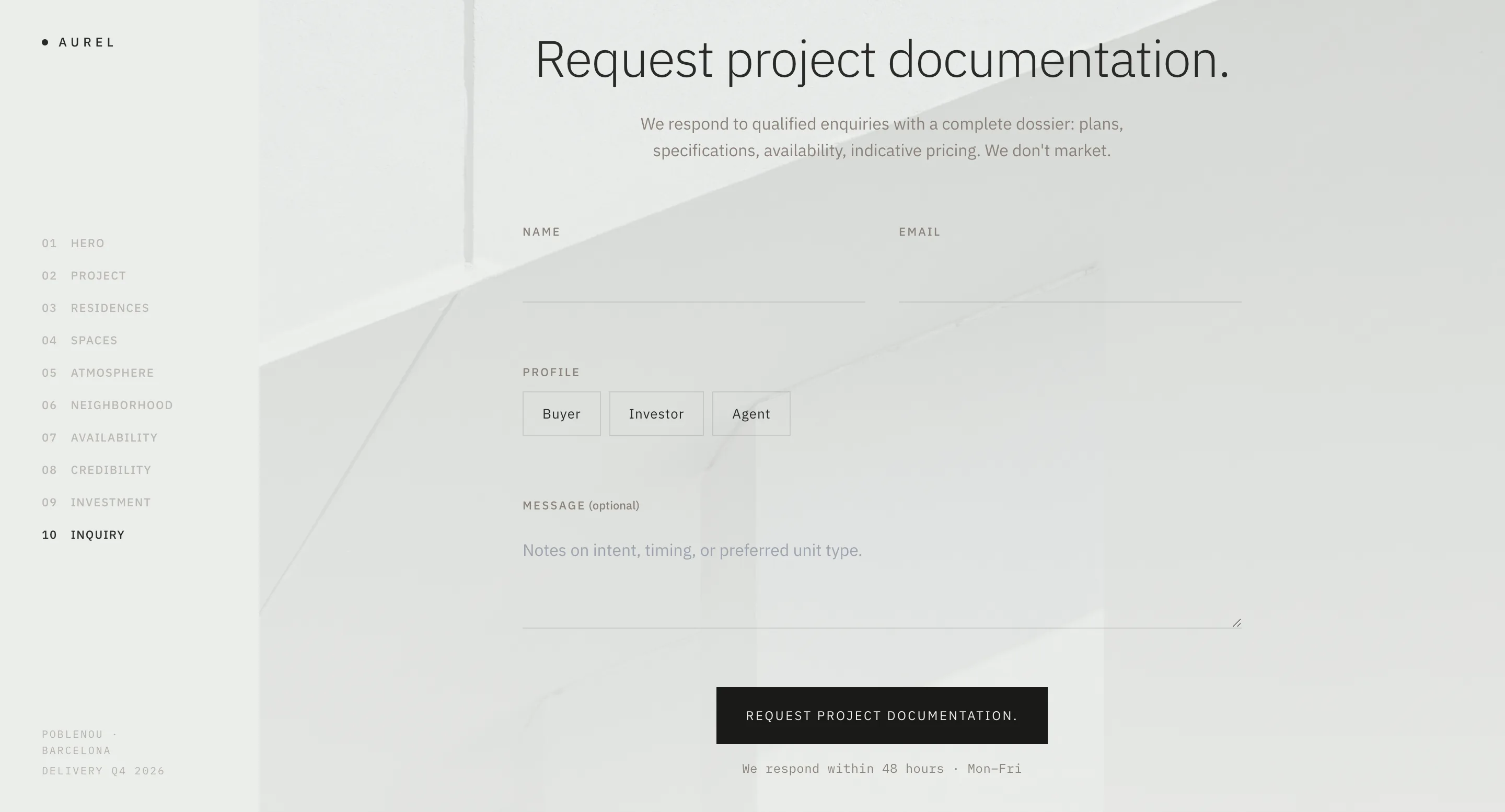
A selective inquiry
The journey ends with a request for project documentation, with buyer, investor and agent profiles, to qualify contacts instead of simply collecting them.
Common thread
Two very different sectors, the same way of thinking. In both cases the job was not to make a place look attractive, but to order information around the decision the visitor is making, conviction for a guest and confidence for a buyer, and to give the right information at the right moment, without excess.
How I'd measure success
For VAGA: how many people write to the house and the quality of those letters, compared with a standard booking widget. For AUREL: documentation requests per visit, the share of qualified buyer and investor profiles and how far visitors get through the ten sections before getting in touch.
Learnings
Working on a personal project meant owning every step, from the first idea to a live site. It confirmed that structure does most of the work: when the sequence is right, the surface needs very little. AI-native tools made the path from idea to working product much shorter, but deciding what to leave out is still a design decision.